


How stories nurture your young child’s development
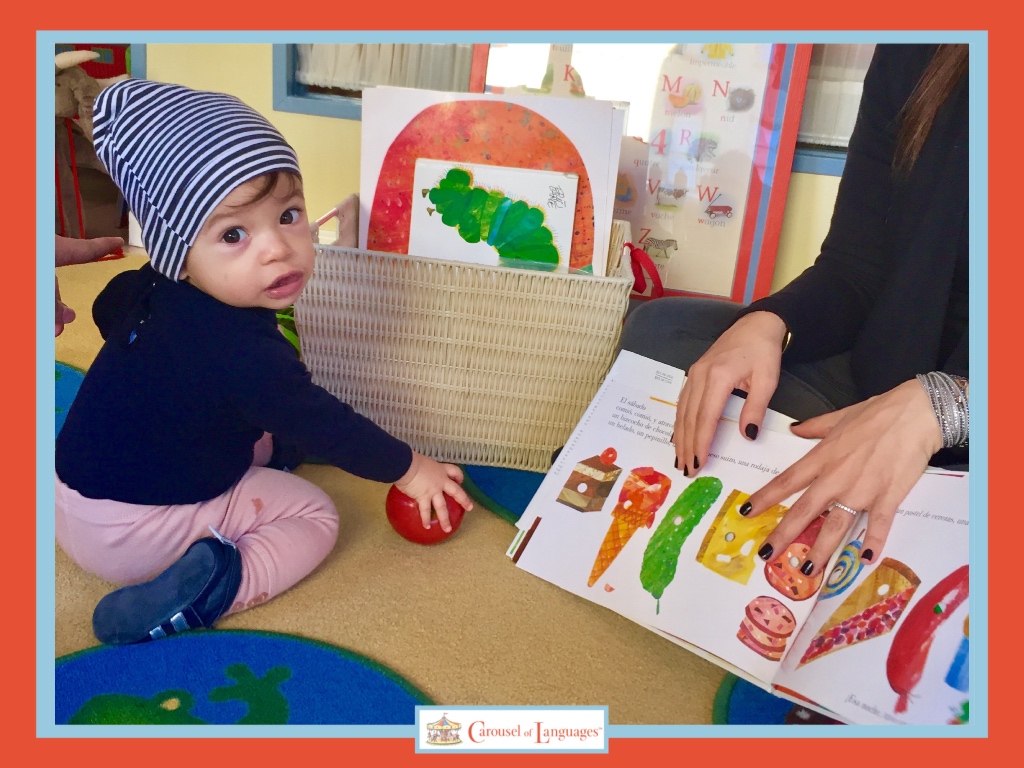
It’s not just a fairytale. Storytelling is vital to your child’s development from the very beginning!
Reading and storytelling with your infant, toddler, or preschooler:
✩ Promotes brain growth
✩ Nurtures language development
✩ Improves Vocabulary
✩ Increases focus, concentration, and attention span
✩ Sharpens memory
✩ Develops listening skills and the patience to listen to others while waiting your turn
✩ Nurtures imagination and creativity
✩ Builds communication skills and helps children learn to express themselves
✩ Develops empathy and the ability to see another person’s point of view
✩ Helps children identify, understand, and talk about feelings
✩ Sparks curiosity
✩ Promotes cultural understanding (their own and others); creates an awareness that they’re part of something larger
✩ Instills values and teaches important life lessons
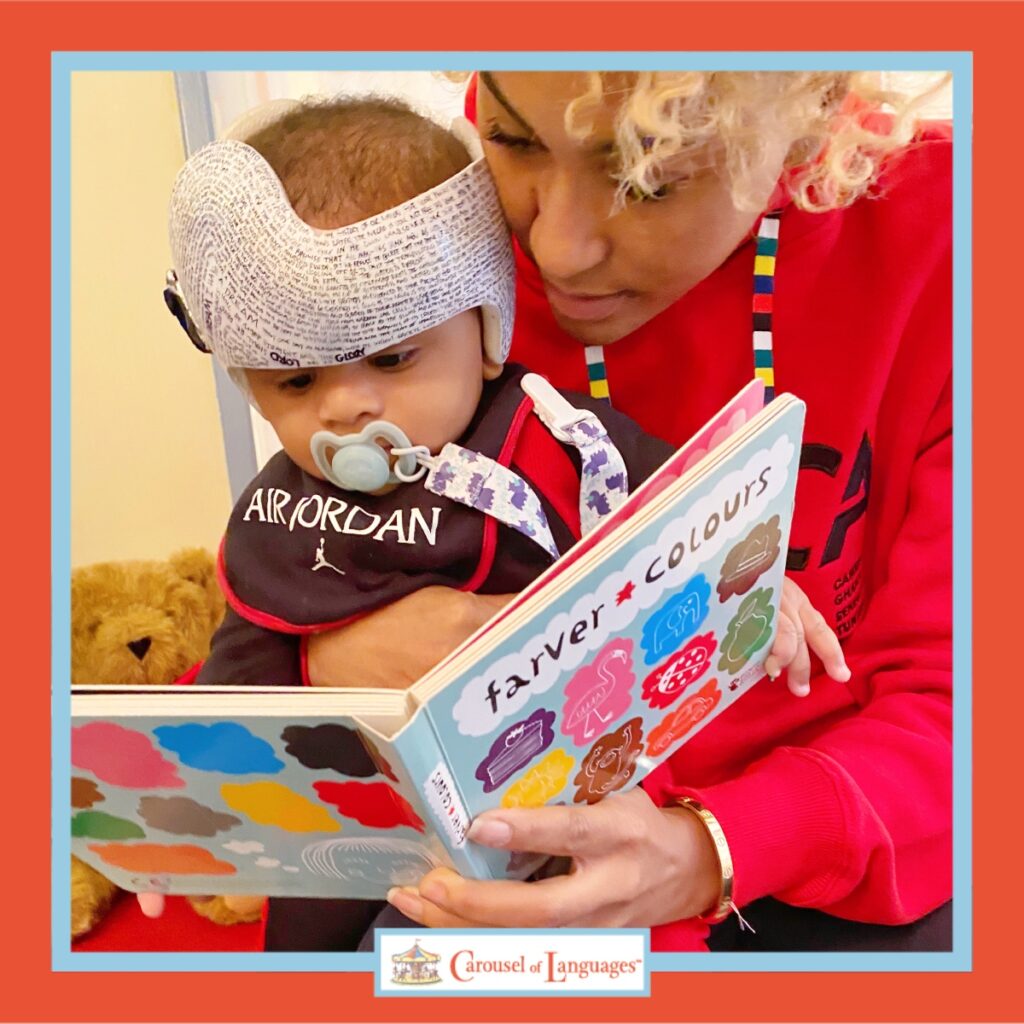
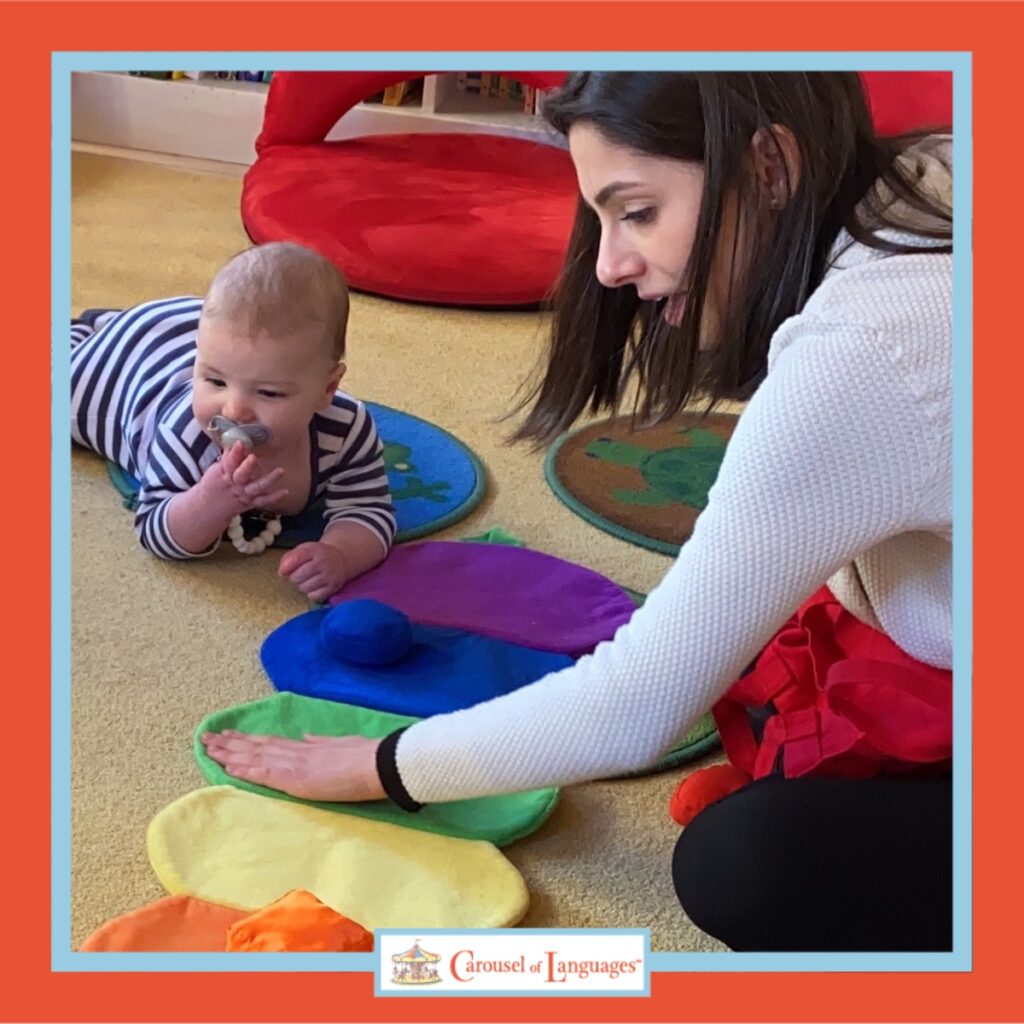
Stories come in almost infinite forms —
Recalling and discussing their day: First we ate breakfast, then we read “Pete the Cat,” then we went to the park, and I got a boo-boo! Then we got ice cream, and I felt better. Then I took a little rest.
Exploring your child’s rich imaginative life: Tell me where you and Teddy Bear went in your spaceship today!
Storytelling games: Let’s take turns! I’ll make up a line of the story, then you make one up!
Reading (and rereading) favorite books: Daddy, read me “Goodnight Moon” again.
Looking at simple picture books with your infant and talking about what you see: Where’s the puppy in the picture? What’s he chewing on? Uh-oh! A shoe!
They’re all wonderful for your young child!
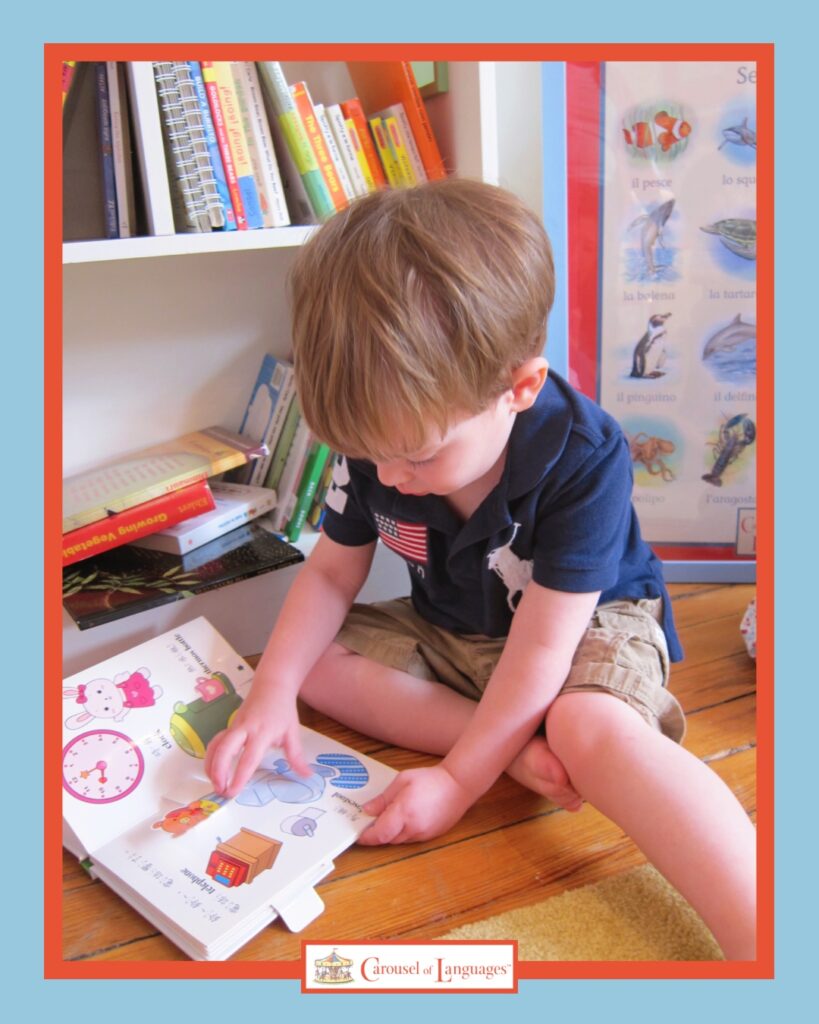
We’ve got expert advice on creating wonderful READING & STORYTELLING experiences for your baby or toddler.
READING TIPS:
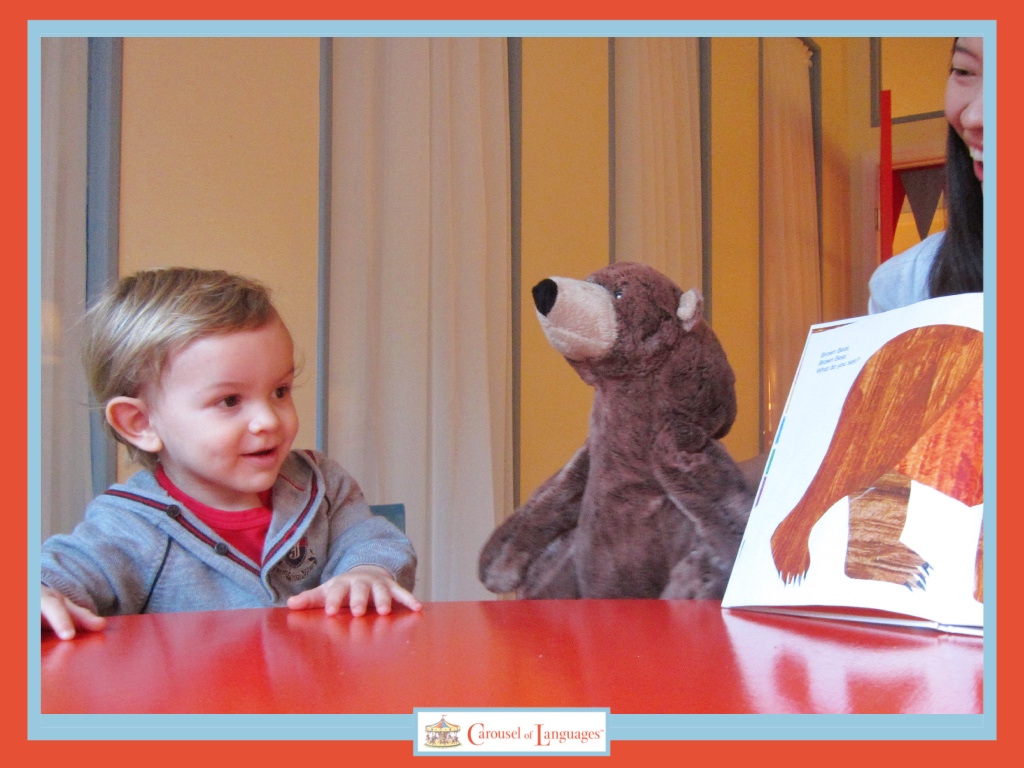
- Read to your newborn right from the start. It may seem like your infant is too young to enjoy books and stories, but they love the sound of your voice and the cuddle time. Snuggle up with a favorite blanket or toy, and some good books. Creating positive associations around reading lays the groundwork for your child to love reading later on.
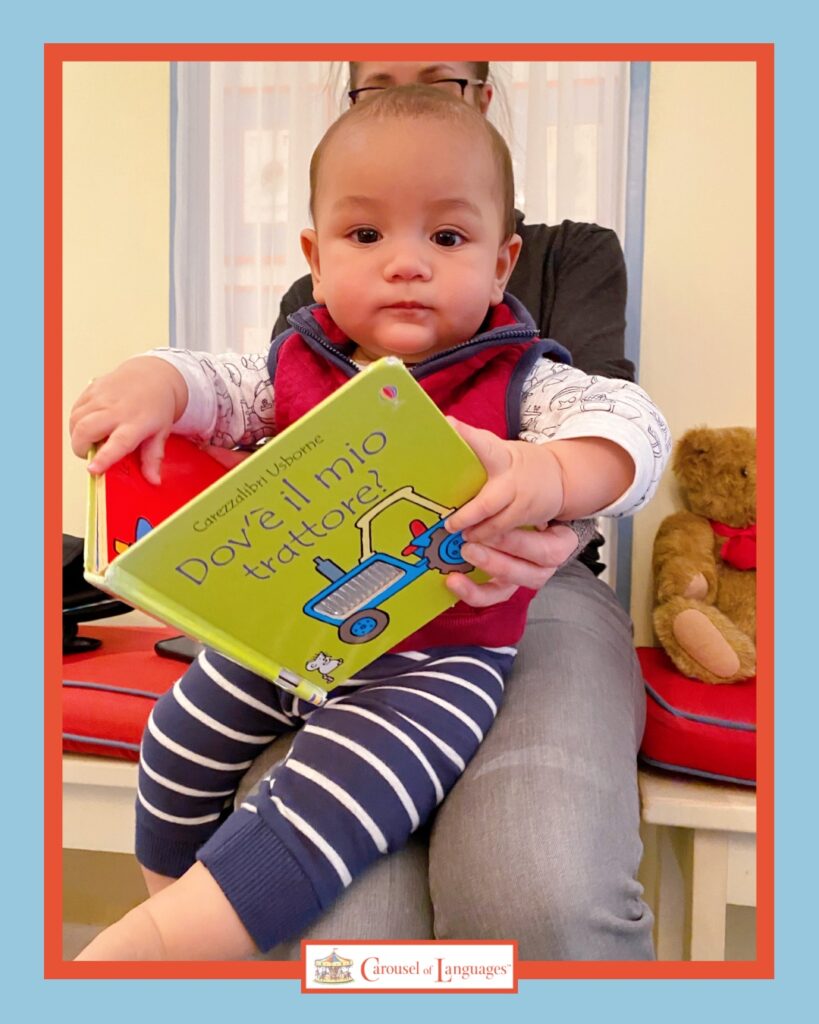
- Start with simple books—soft cloth or board books, with colorful pictures and just a few simple words.
- Create reading rituals for different times of day. Books go great with morning snuggles. Read together over lunch or at the park. Make your evening routine soothing and special with a bedtime story. Consider creating a special reading corner.
- Read aloud ANYTHING you’re reading—your to-do list, a recipe, a birthday card, the weather report. This helps tune your child’s ear to know your voice and to become familiar with the sounds of the language you speak at home. (Eventually, it will also nurture print awareness—the understanding that our world is full of letters and words that have meaning.)
- Children love stories that reflect their own experience. Choose books about daily life: food, parts of the body, clothing, cars and trucks, animals and pets, neighborhood, and so on.
- Use picture books to build vocabulary. Point to the pictures, say what you see.
- Look for reading material with repetition, rhythm, and rhyme – this tunes the ear to recognize sounds and patterns, improves memory, builds vocabulary, and helps develop important components of early literacy, such as phonological awareness.
- Infants and toddlers love interactive books that invite them to “touch and feel” or search for something in the picture.
- Starting in toddlerhood, prompt your child to talk with you about what you’re reading together. Oh no! Pete the Cat stepped in STRAWBERRIES with his white shoes on! What’s he going to do? Or, How do you think the little girl felt when she won the game / the sandcastle got knocked over?
- Read in an expressive voice. You don’t have to be a great actor – your baby will think you are! When you’re excited and involved, they will be too.
- Discover new books. Visit your library or bookstoreand let your child pick out something that captures their attention.
- Reread old favorites. Children love to hear the same stories again and again (and again). Repetition is good! Studies show that rereading the same books boosts vocabulary and memory.
STORYTELLING IDEAS:
Tell your own stories—both true and invented!
- Engage in daily conversation with your child.
- Young children love to hear stories about themselves and the lives of people they love.
- Tell stories about what you did with your day, or a special memory like visiting a friend, or going swimming at the lake. Talk about the day your child was born, or what you liked to do when you were little.
- Nurture your child’s creativity by letting them see that you can make it up as you go along. Imagination can take you anywhere – it’s full of twists and turns, surprises and fun!
- Encourage your child to tell stories—all different kinds!
- Truth and fiction. Tell me what you did with Grandma today. Or, What did you and Teddy Bear do in the fort you made?
- Offer fun prompts for tales that take creativity and imagination. Tell me a story about… a giraffe who likes baking cupcakes!
- Round-robin. Start a story together and take turns telling the next part.
- Entrances and exits. Let your child give you a story idea or an opening line, or make up the ending to one you started.
- Really listen when your child tells stories.
- For extra fun and enrichment, write your child’s story down and read it back to him later. He’ll love being an author. Add some dramatic play—have him act it out for you.
- Use a family photo as a story prompt
- Get out the art supplies and let your child draw a picture and tell you a story about it.
Practical pointers:
- Does your baby chew on books? That’s ok. Children explore the world with their senses; interacting physically with books (including mouthing them) is normal. Just be safe: choose sturdy books, keep them clean, replace heavily chewed or saturated items, and always supervise your child.
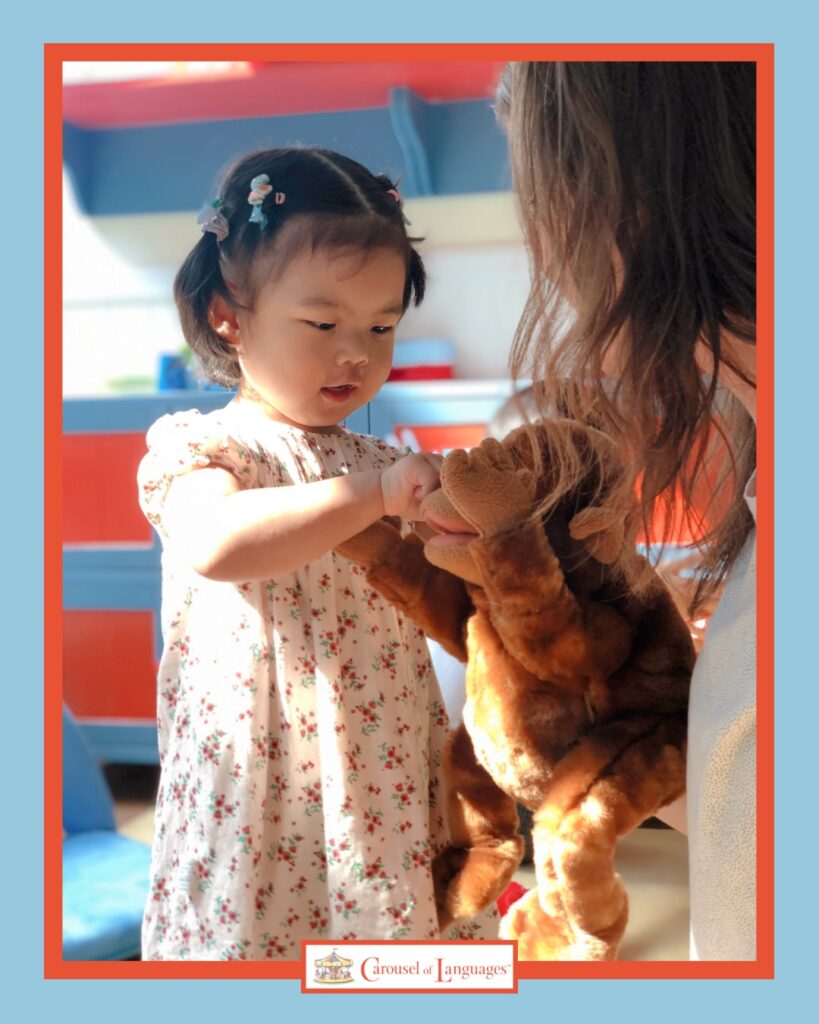
- Your toddler can’t sit still? Don’t worry. Young children are always on the move because they’re physical learners. Look for ways to engage your child with the story through their body. Show me how the kangaroo hops!
- Tell stories in places and at times of day when you’re likely to have your child’s attention, such as on a car ride.
- Take a break when they lose interest.
Research shows that, for very young children, social interaction is one of the most important factors in brain growth, language learning, social-emotional development, and early literacy.
Cuddling up together to read a book, telling stories at the dinner table, singing songs, learning nursery rhymes and poems, or just talking about your day as you take a walk or do housework –
especially during the first year of life, when a baby’s brain is extremely pliable (high neuroplasticity), these positive storytelling experiences help shape the developing brain.
…and they READ happily ever after.
✩✩✩
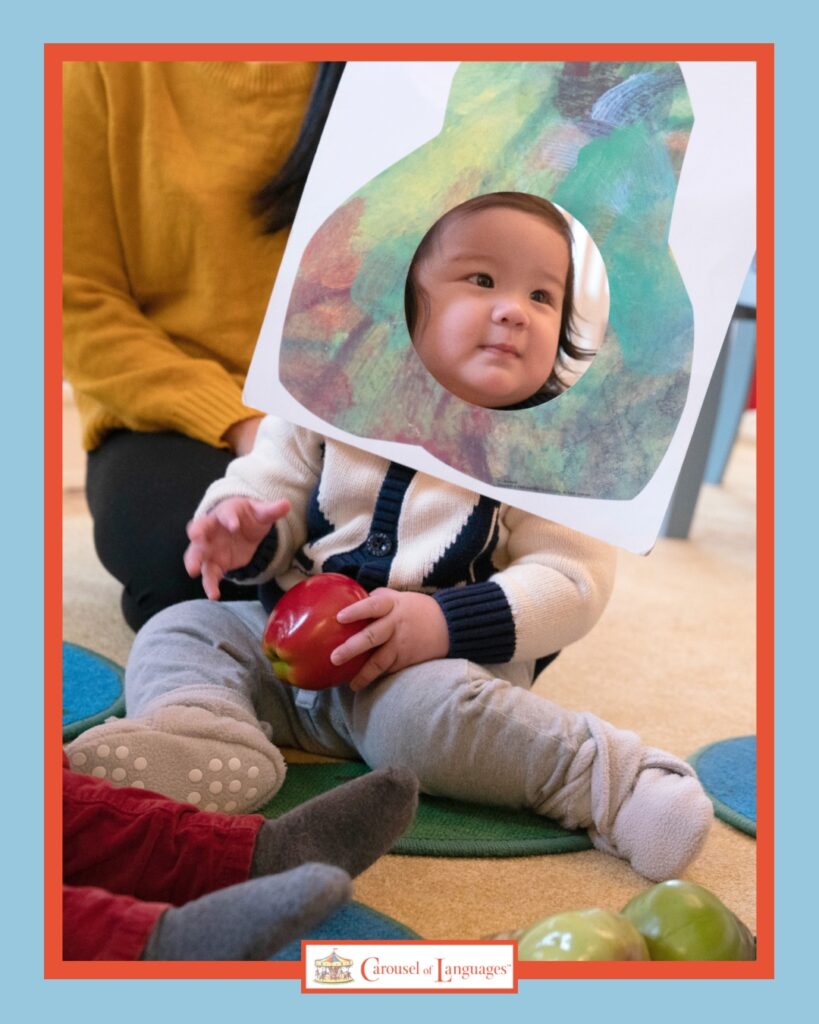
Interactive Storytelling with our youngest students at Carousel
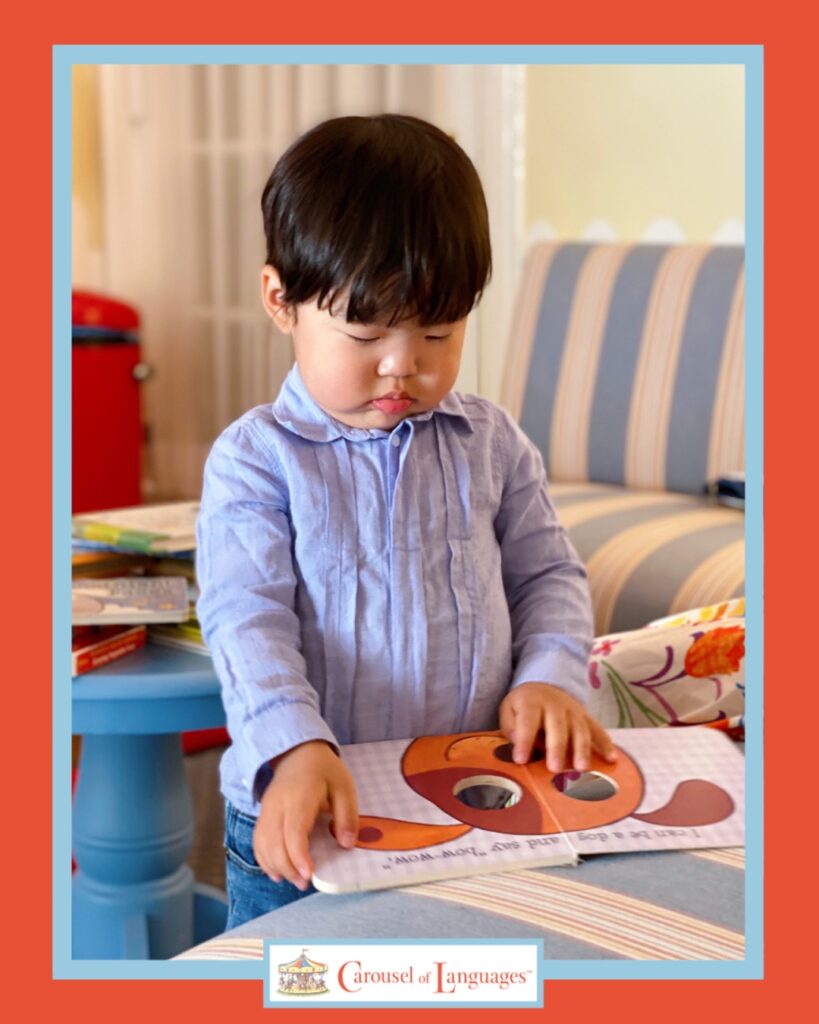
“Infants and toddlers learn through their senses. At Carousel, we don’t simply read a book — we bring it to life. With props, visuals, songs, gestures, and guided play, children see, listen, and touch every new word. They are not just listeners, they are participants.”
– Danchen Zhao, Director of Curriculum Design and Instruction, Carousel of Languages
★★★
Sources & further reading
http://www.earlyliteracylearning.org/cellpract_parent/toddler/collections/CELL_Todd_Story_Listen.pdf
https://learnatcornerstone.com/benefits-of-storytelling-for-kids
https://raisingchildren.net.au/babies/play-learning/literacy-reading-stories/reading-storytelling
https://www.kumon.co.uk/blog/the-benefits-of-storytelling
https://childmind.org/article/why-is-it-important-to-read-to-your-child