


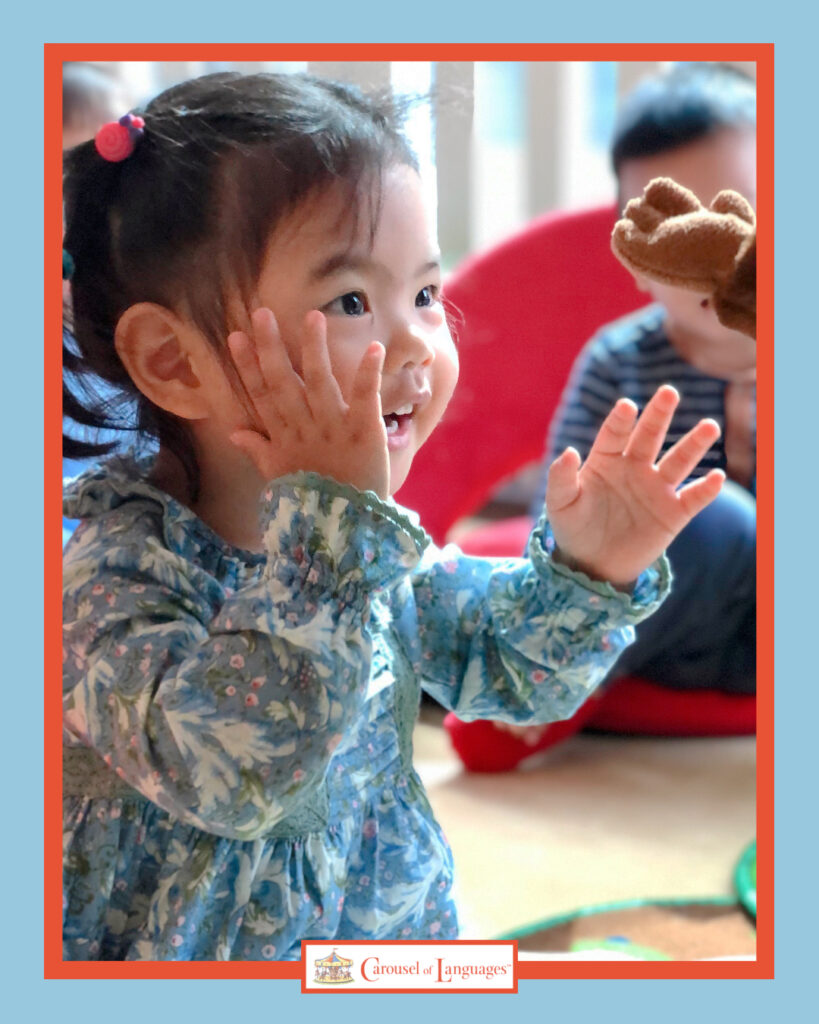
Why play is crucial for young children – and how parents can help them get the most out of it
Swiss psychologist Jean Piaget, who made the first formal study of cognitive development in children, famously said, “Play is the work of the young child.”
For your toddler or preschooler, play is never “just play”—it’s how they engage with, explore, and make sense of their world. It’s how they learn what interests them, expand their imagination, and develop creativity.
Play helps them practice problem-solving, decision-making, and strategizing, as well as relationship-building social-emotional competencies like sharing, taking turns, cooperation, collaboration, negotiation, and conflict resolution.
Through play, young children gain new vocabulary and practice language and communication skills.
They learn about emotions—their own and others’—how to understand and express feelings, self-regulate, and develop empathy.
When children pretend-play, they imitate grown-ups, rehearse the routines and skills of daily life, conquer fears, and “create a world they can master,” says the American Academy of Pediatrics (AAP), and that builds confidence and self-esteem.
Play is also good for growing bodies—practicing gross and fine motor skills and getting healthy exercise.
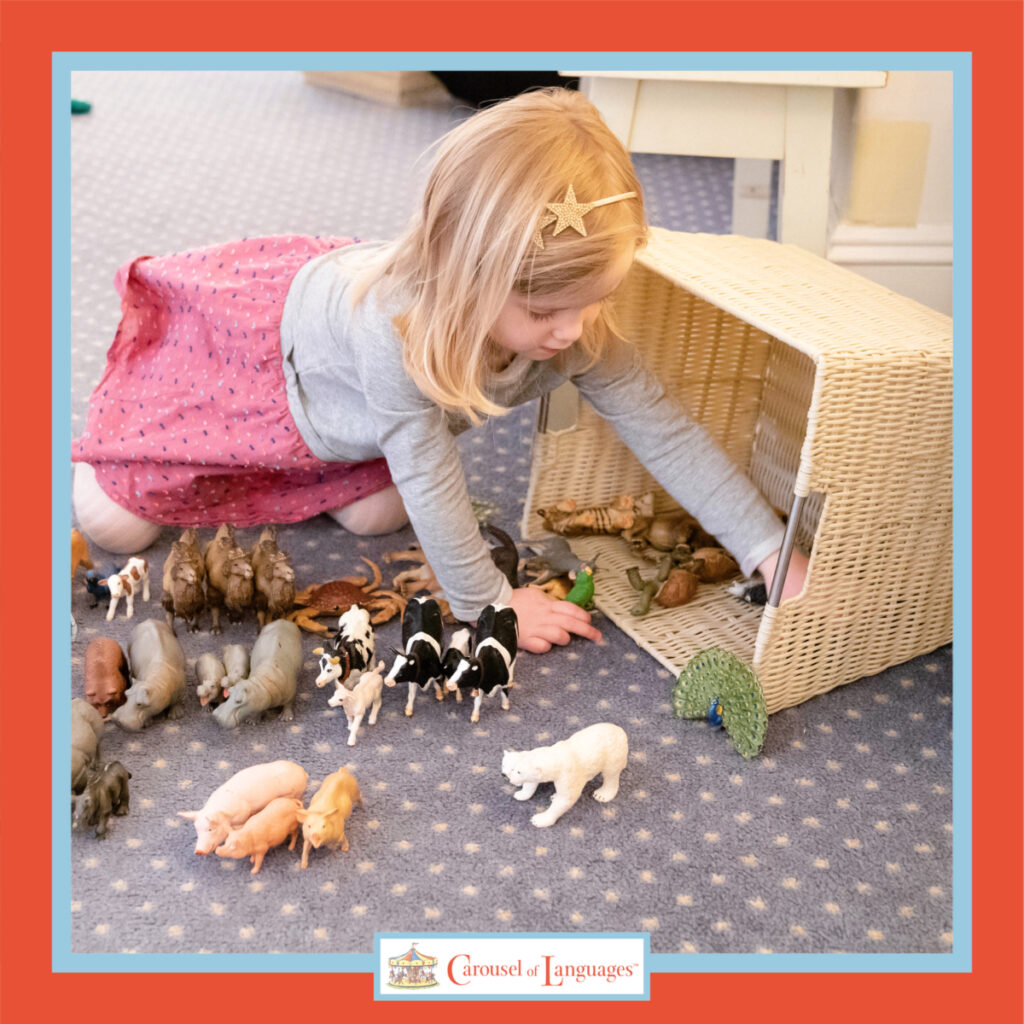
Parents and Play
“Play is essential to development because it contributes to the cognitive, physical, social, and emotional well-being of children and youth. Play also offers an ideal opportunity for parents to engage fully with their children.” (AAP)
- When you play with your child, they learn that they are loved, safe, and cared for; that you’re interested in them, and you’re paying attention; that they’re important, and fun to be around—playing together builds confidence and self-esteem. Allow most of your play to be child-driven: let them take the lead, move at their pace. Discover what they want to play together and let it unfold organically. Offer guidance and ideas as needed without controlling or disrupting the game.
- Give cues. When your child is playing on their own, you can prompt them to take it to the next level. Oh, I love that you’re grocery shopping! Are you going to come home and make dinner? Yummy! You can also ask questions and encourage them to talk to you about their play-pretend later—really listen. Show your enthusiasm for the imaginative worlds they create and the stories they tell. Tell me about where you and Teddy went in your boat today! What did you see?
- Children need time and space for free, unstructured play. School is important, enriching lessons are wonderful, but don’t schedule every minute with formal activities. Particularly in our high-tech, digitally-focused world, it’s easy for children to get used to constant stimulation. It’s important to provide plenty of time and space away from devices and screens. Children need opportunities to get bored and find ways to entertain themselves.
- Stories and songs stimulate imagination and creativity! Read with your child, tell them made-up stories, or make them up together. Write down your child’s story and have them illustrate it. Or have them act out a story using their whole body. Sing fun songs and do fingerplays together.
- Puzzles and shape sorters help children learn problem-solving and develop early math skills including shapes, sizes, and spatial reasoning. Prompt your child to name sizes and shapes, even colors as you play these games. Can you find the big red triangle that goes here?
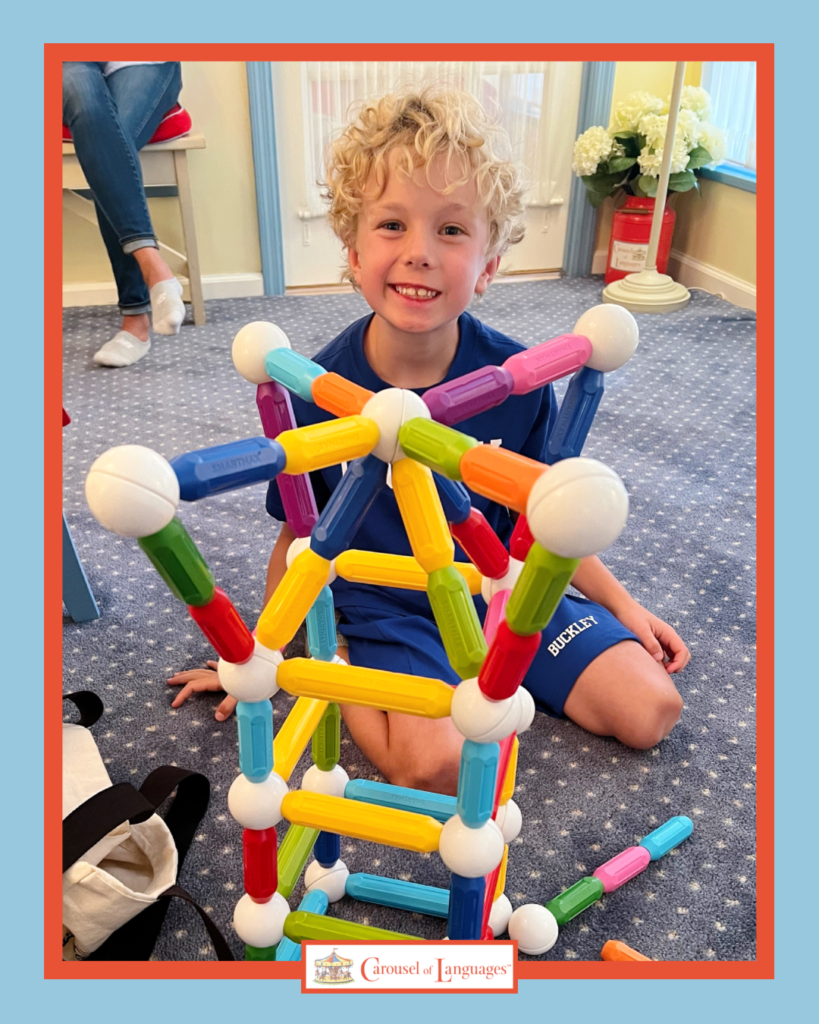
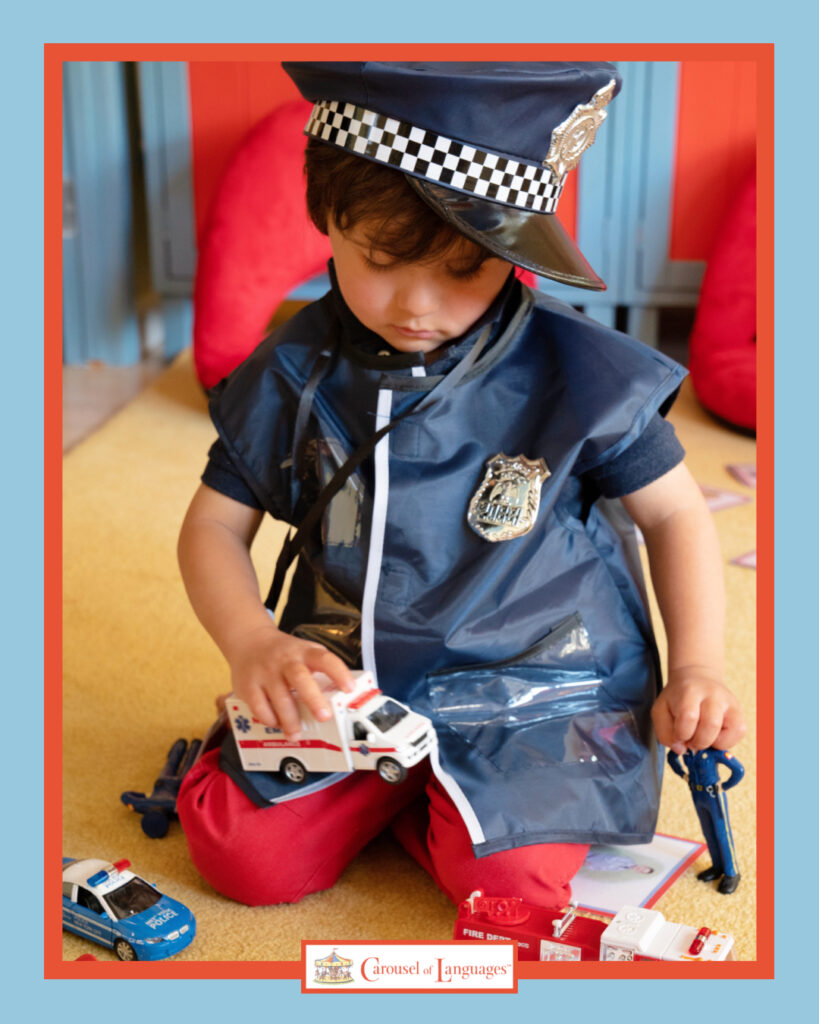
- Dramatic play and props. Young children reenact daily activities and practice vital life skills through pretend play. Basic household and job objects like toy pots and pans, cleaning supplies, a cash register and shopping cart, baby stroller, briefcase, doctor’s bag, dolls and dollhouses, etc., as well as a dress-up box with basic clothing pieces, enhance dramatic play. Remember too that open-ended objects stimulate your child’s creativity! Blocks, boxes, a broomstick, plastic garden pots, and so on, can become anything! When you roleplay together, demonstrate how your imagination can transform something simple into a meaningful object: “bake” a birthday cake out of blocks, turn a laundry basket into a race car, or an old scarf into a superhero cape!
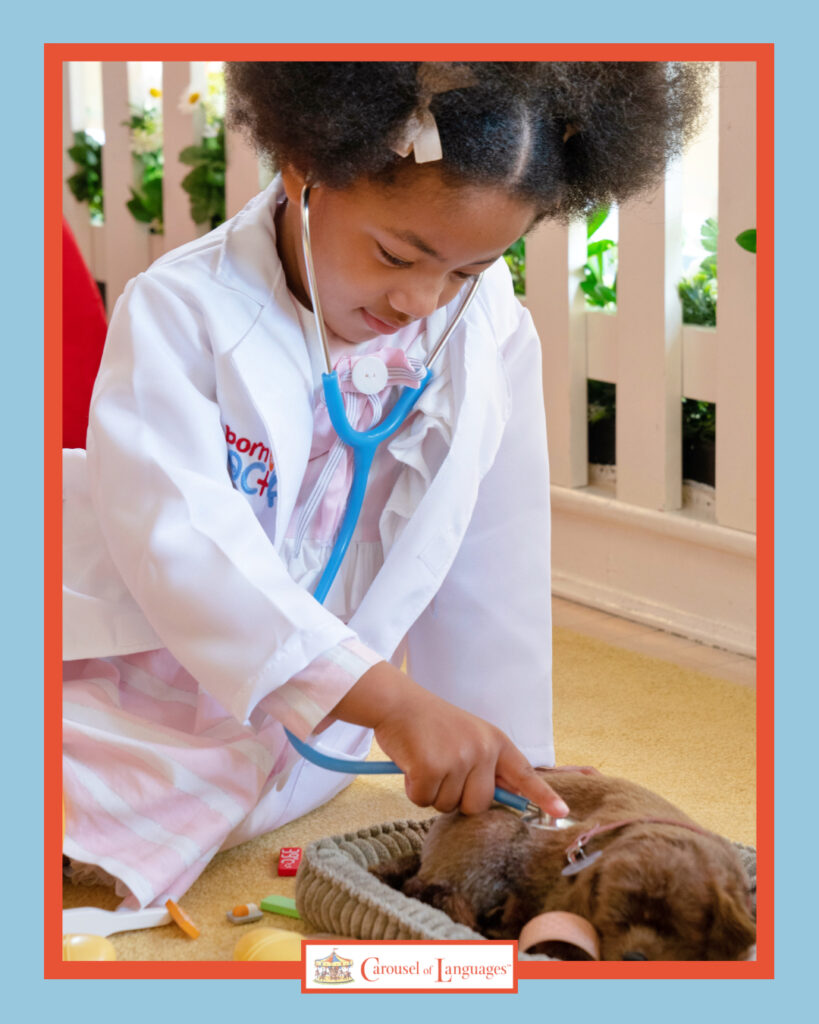
- Provide craft supplies. Open-ended is also best for art activities. Supply paper and fabric scraps, washable non-toxic markers or paint, crayons, empty egg or milk cartons, glue, craft sticks, ribbon, yarn, buttons, and objects from nature like seashells, pinecones, leaves, petals, and seeds…and let your child create! (Safety First! Beware of choking hazards for children under 3 years).
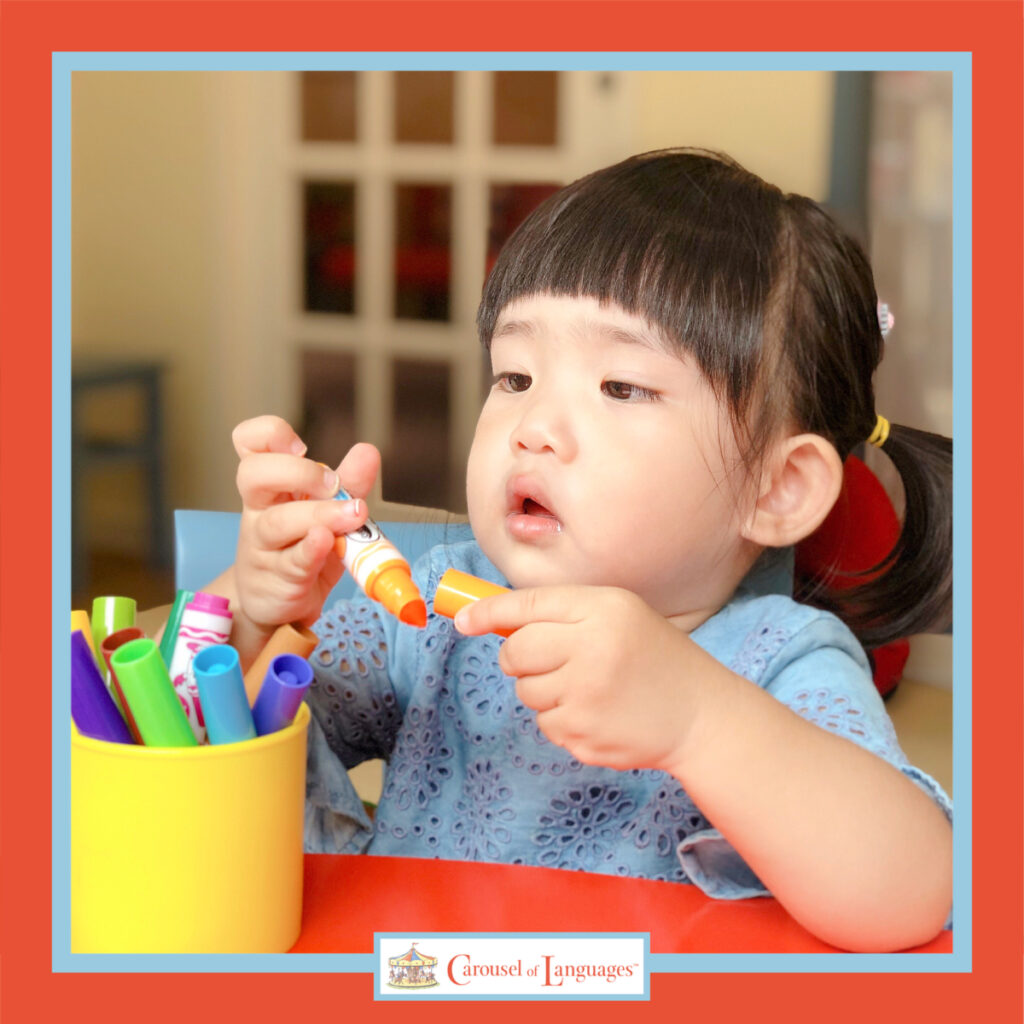
- Move together. Infants, toddlers, and preschoolers are natural physical learners, and movement stimulates the developing brain. According to Eric Jensen, an educator, leading expert in brain-based learning, and author of Teaching with the Brain in Mind, “A solid body of evidence shows a strong relationship between motor and cognitive processes….In the same way that exercise shapes up the muscles, heart, lungs, and bones, it also strengthens the basal ganglia, cerebellum, and corpus callosum—all key areas of the brain.” Throw/kick a ball around with your child, take walks outside, play chase, do some yoga, have a dance party, make an obstacle course out of furniture and pillows or a tunnel out of boxes.
All these tips can help you help your child engage in high-quality play. But you don’t have to be an expert! The best part of playing is making it up as you go along. Connect with your child and have fun—playtime is bonding time with learning built in!
Play is the foundation of Carousel’s early-childhood foreign language program. Carousel of Languages Teaching SystemTM, our signature curriculum, is built around the extensive body of research demonstrating the cognitive benefits of early multilingual exposure and the immense value of play-based learning—both free-play and structured/teacher-guided.
⭐️⭐️⭐️
sources and additional reading
https://www.zerotothree.org/resources/315-stages-of-play-from-24-36-months-the-world-of-imagination
https://pathways.org/kids-learn-play-6-stages-play-development
https://dreme.stanford.edu/news/puzzle-play-easy-way-boost-early-spatial-and-math-learning